
Jean Daillant: «L’ESRF è una infrastruttura che aiuta l’Europa a produrre conoscenza, innovazione e competitività»
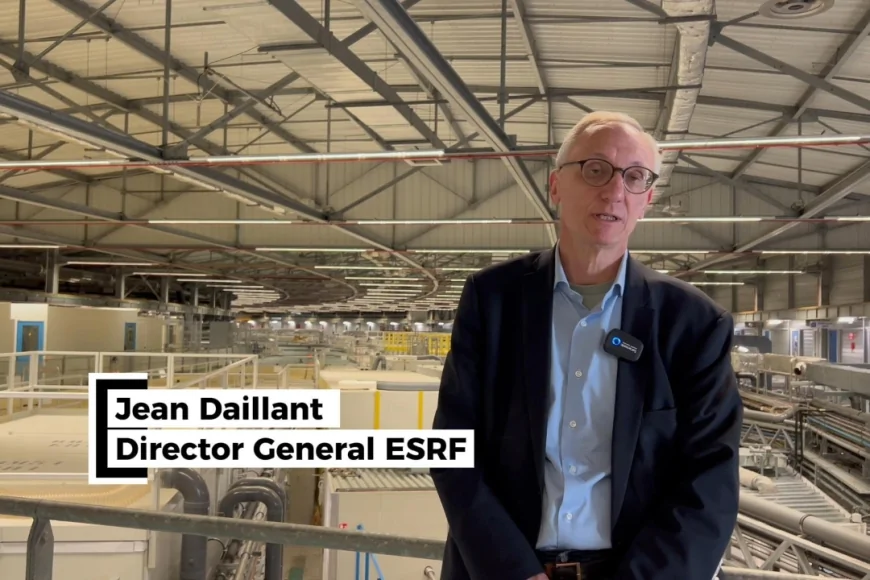
Grenoble è uno dei grandi nodi europei della ricerca ed è anche un luogo in cui diventa evidente come la scienza contemporanea non possa più essere raccontata come un mondo separato, chiuso in laboratori altamente specializzati e distante dalla vita quotidiana. All’ESRF , la luce di sincrotrone attraversa oggi la materia, la salute, l’ambiente, l’industria, le batterie, il cibo, gli organi umani.
In questa intervista, Jean Daillant, direttore generale dell’ESRF, riflette sulle priorità del suo mandato, sull’impatto della trasformazione resa possibile dall’Extremely Brilliant Source e sul ruolo che grandi infrastrutture come questa possono avere nel rafforzare l’autonomia scientifica e industriale dell’Europa.
La versione completa dell’intervista è disponibile su YouTube.
GRENOBLE — C’è un punto in cui la ricerca smette di apparire come un sapere remoto e comincia a mostrarsi per ciò che è davvero: una infrastruttura di possibilità. È in luoghi come l’ESRF che questa evidenza prende forma con maggiore chiarezza. Perché qui la fisica non resta confinata in un recinto specialistico, ma diventa strumento per osservare meglio la materia, comprendere sistemi biologici complessi, analizzare materiali avanzati, leggere organi umani interi, contribuire all’innovazione e alla competitività europea.
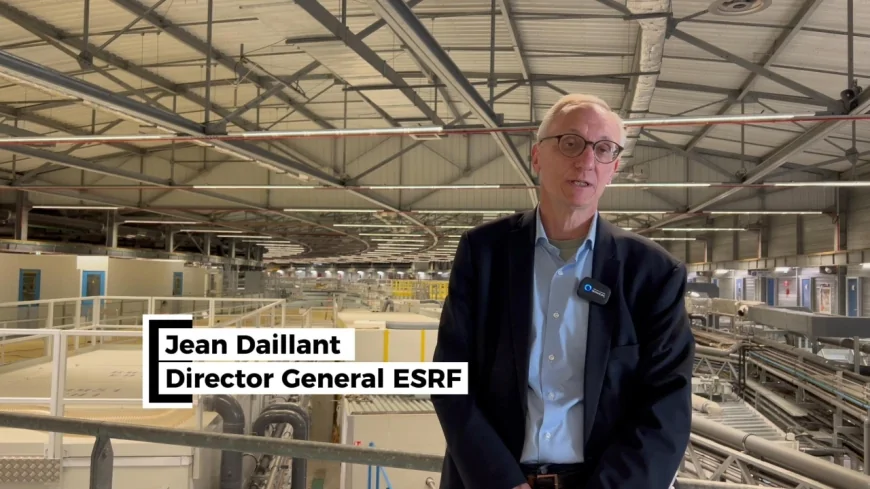
A guidare oggi questa realtà è Jean Daillant, che ha assunto la direzione generale dell’ESRF il 2 settembre 2024. Nel corso del press tour con UGIS - Unione dei Giornalisti Italiani Scientifici a Grenoble, lo abbiamo incontrato per capire quale visione stia portando in questa nuova fase e quale ruolo attribuisca a una grande infrastruttura scientifica nel contesto europeo di oggi.
Direttore Daillant, Lei ha assunto la guida dell’ESRF il 2 settembre 2024. Con quale visione ha iniziato questo mandato e quali considera oggi le priorità principali per il futuro della struttura?
Jean Daillant: Conoscevo già l’ESRF di dieci anni fa e, quando sono arrivato nel 2024, sono rimasto molto colpito dal grande salto compiuto grazie all’upgrade della facility e dalla qualità della scienza che veniva già prodotta qui. Dopo poco più di un anno, però, sono ancora più impressionato dal potenziale che vedo per il futuro.
Direi che oggi le priorità sono soprattutto due. La prima è ampliare ulteriormente la portata dei progetti che sviluppiamo, in modo sempre più collaborativo con la nostra comunità di utenti. La seconda, che è anche una grande sfida, è riuscire a valorizzare al meglio tutti i dati che raccogliamo. C’è infatti un potenziale straordinario, in particolare nell’uso dell’intelligenza artificiale, per produrre conoscenza a un livello davvero senza precedenti.
L’ESRF è spesso percepito come un luogo altamente specialistico. Se dovesse spiegarne il valore a un pubblico non scientifico, come racconterebbe in modo semplice perché questa infrastruttura è importante per la società europea?
Jean Daillant: In realtà sfiderei proprio questa idea. L’ESRF non è affatto una struttura che riguarda solo un ambito ristretto. Al contrario, contribuisce a una gamma molto ampia di aree scientifiche: biologia, chimica, scienza dei materiali, fisica, scienze planetarie, scienze ambientali e molte altre ancora.
Questa ampiezza si traduce anche in un impatto sociale crescente. Lavoriamo, per esempio, su batterie, salute, ambiente, scienze alimentari. Per questo direi che il valore dell’ESRF per l’Europa consiste nel contribuire concretamente a quasi tutte le sue grandi priorità.
Negli ultimi anni l’ESRF ha attraversato una trasformazione cruciale con l’Extremely Brilliant Source. In che modo questo salto tecnologico ha cambiato la qualità della ricerca e la gamma delle possibili applicazioni nei diversi campi scientifici?
Jean Daillant: L’obiettivo principale di questo upgrade era ottenere fasci di raggi X molto più focalizzati e brillanti. Questo oggi ci consente di osservare campioni molto eterogenei con alta risoluzione, con la possibilità di fare zoom in e zoom out e di lavorare anche in tempo reale.
In più, poiché produciamo raggi X molto penetranti, possiamo studiare grandi dispositivi mentre sono in funzione oppure organi umani completi con un livello di risoluzione che prima non era possibile raggiungere. È questo che ha cambiato profondamente sia la qualità della ricerca sia l’ampiezza delle sue applicazioni.
Nel contesto europeo attuale, segnato da competizione tecnologica, transizione energetica e tensioni geopolitiche, che ruolo possono avere grandi infrastrutture di ricerca come l’ESRF nel rafforzare l’autonomia scientifica e industriale dell’Europa?
Jean Daillant: Proprio di recente, a Bruxelles, in occasione del lancio di una nuova associazione che riunisce le sorgenti di luce europee, è emerso con grande chiarezza anche da parte della Commissione quanto queste grandi infrastrutture siano necessarie. Sono certamente hub per la scienza, ma anche per la tecnologia e per l’innovazione.
Noi lavoriamo ogni anno con più di cento aziende europee, grandi gruppi ma anche PMI e startup, in settori diversi. Questo significa contribuire concretamente a rafforzare la competitività europea e a ridurre la dipendenza dell’Europa da Paesi esterni.
Se dovesse indicare una sola idea che il pubblico dovrebbe portare via visitando l’ESRF, quale sarebbe?
Jean Daillant: Che l’ESRF è una infrastruttura di ricerca che contribuisce a molti campi diversi della scienza e dell’innovazione.
L’impressione, uscendo dall’ESRF, è che Jean Daillant non guardi a questa infrastruttura come a un tempio della specializzazione, ma come a un luogo in cui la ricerca europea può ampliare contemporaneamente la propria profondità scientifica e la propria rilevanza strategica.
E forse è proprio questo il punto più interessante: in una fase storica in cui l’Europa è chiamata a ripensare autonomia, competitività e capacità di visione, centri come l’ESRF ricordano che la conoscenza non è un lusso collaterale, ma una delle forme più concrete del futuro.
ENGLISH VERSION
Title
Jean Daillant: “ESRF is an infrastructure that helps Europe generate knowledge, innovation and competitiveness”
Subtitle
From the new phase opened by the Extremely Brilliant Source to the role of large research infrastructures in a Europe shaped by the energy transition, technological competition and geopolitical tensions, ESRF European Synchrotron Radiation Facility’s Director General reflects on vision, priorities and the future potential of one of the continent’s leading research centres.
Description
Grenoble is not only one of Europe’s major research hubs. It is also a place where it becomes clear that contemporary science can no longer be described as a separate world, confined to highly specialised laboratories and remote from everyday life. At ESRF, synchrotron light now intersects with matter, health, the environment, industry, batteries, food and even whole human organs.
In this interview, Jean Daillant, Director General of ESRF, reflects on the priorities of his mandate, on the transformation brought about by the Extremely Brilliant Source, and on the role that large research infrastructures can play in strengthening Europe’s scientific and industrial autonomy.
The full version of the interview is available on YouTube
Interview
GRENOBLE — There comes a point at which research stops appearing as a remote body of knowledge and begins to reveal itself for what it really is: an infrastructure of possibility. It is in places such as ESRF that this becomes most visible. Here, physics does not remain enclosed within a specialist domain; it becomes a tool for observing matter more closely, understanding complex biological systems, analysing advanced materials, reading entire human organs, and contributing directly to innovation and European competitiveness.
Today ESRF is led by Jean Daillant, who took over as Director General on 2 September 2024. During the visit to Grenoble, we spoke with him about the vision he is bringing to this new phase and the role he believes a major research infrastructure should play in today’s Europe.
Director Daillant, you took over the leadership of ESRF on 2 September 2024. With what vision did you begin this mandate, and what do you see today as the main priorities for the future of the facility?
Jean Daillant: I already knew ESRF as it was ten years ago, and when I arrived in 2024 I was genuinely struck by the major step forward made through the facility upgrade, as well as by the quality of the science already being carried out here. But now, after a little more than a year, I am even more impressed and encouraged by the potential I see for the years ahead.
I would say that the priorities are essentially two. The first is to further broaden the scope of the projects we develop, in an increasingly collaborative way with our user community. The second, which is also a major challenge, is to make the best possible use of all the data we collect. There is extraordinary potential there, especially through the use of artificial intelligence, to generate knowledge at a truly unprecedented level.
ESRF is often perceived as a highly specialised place. If you had to explain its value to a non-scientific audience, how would you describe in simple terms why this infrastructure matters for European society?
Jean Daillant: I would actually challenge that very idea. ESRF is not a facility that serves only a narrow field. On the contrary, it contributes to a very wide range of scientific areas: biology, chemistry, materials science, physics, planetary science, environmental science and many others.
That breadth also translates into growing societal impact. We work, for example, on batteries, health, environmental science and food science. So I would say that ESRF’s value for Europe lies in the fact that it contributes in a very concrete way to almost all of Europe’s major priorities.
In recent years ESRF has undergone a crucial transformation with the Extremely Brilliant Source. How has this technological leap changed the quality of research and the range of possible applications across different scientific fields?
Jean Daillant: The main objective of this upgrade was to produce much more focused and brilliant X-ray beams. This now allows us to look at very heterogeneous samples with high resolution, with zooming in and out capabilities, and to do so in real time.
Because we also produce very penetrating X-rays, we can now study large devices while they are operating, or even full human organs with a level of resolution that was simply not possible before. That is what has profoundly changed both the quality of the research and the breadth of its applications.
In today’s European context, marked by technological competition, the energy transition and geopolitical tensions, what role can large research infrastructures such as ESRF play in strengthening Europe’s scientific and industrial autonomy?
Jean Daillant: Very recently, in Brussels, at the launch of a new association bringing together Europe’s light sources, it became very clear, including from the European Commission, just how necessary such large facilities are. They are certainly hubs for science, but also for technology and innovation.
Each year, we work with more than one hundred European companies, including large groups, SMEs and start-ups, across a range of sectors. That means contributing directly to European competitiveness and helping reduce Europe’s dependence on external countries.
If you had to point to one single idea that the public should take away after visiting ESRF, what would it be?
Jean Daillant: That ESRF is a research infrastructure contributing to many different areas of science and innovation.
The impression one leaves ESRF with is that Jean Daillant does not view this facility as a temple of specialisation, but as a place where European research can expand both its scientific depth and its strategic relevance at the same time.
And perhaps that is the most interesting point of all: at a historical moment in which Europe is being called upon to rethink autonomy, competitiveness and long-term vision, centres such as ESRF remind us that knowledge is not a secondary luxury, but one of the most concrete forms of the future.
Qual è la tua reazione?
 Mi piace
0
Mi piace
0
 Antipatico
0
Antipatico
0
 Lo amo
0
Lo amo
0
 Comico
0
Comico
0
 Wow
0
Wow
0
 Triste
0
Triste
0
 Furioso
0
Furioso
0

Redazione Eventi e News














Commenti (0)